
Move forward in evidence-based stages, with a clear decision gate before equipment sizing, controls integration and site acceptance.
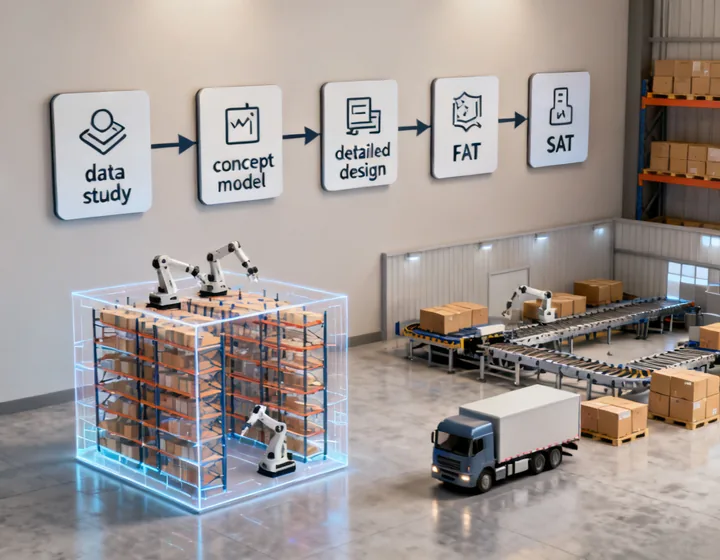
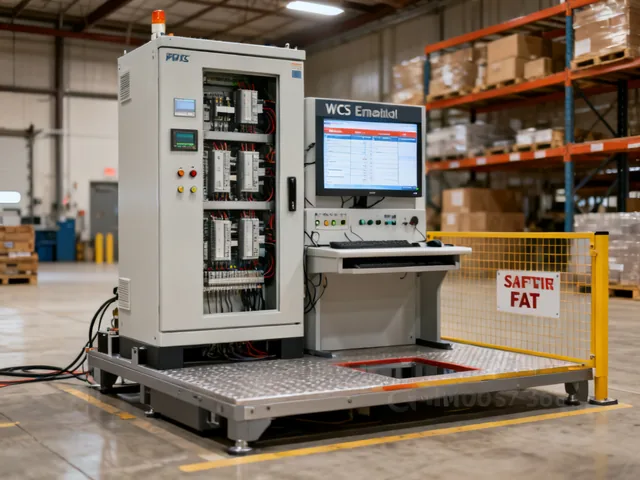
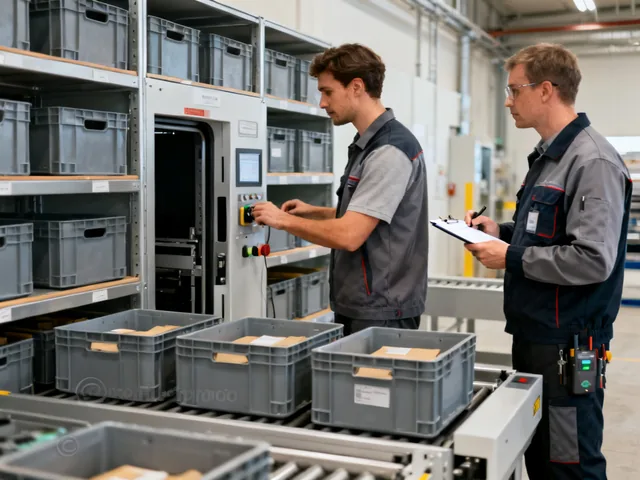
Discovery checks whether the data represents real operations. Concept work tests whether cube storage fits the load, access and building envelope. Detailed design closes interfaces and safety responsibilities. FAT examines controls and defined faults before shipment. SAT proves site behavior with representative loads and trained owners.
Progress is not a percentage of equipment installed. It is the number of critical assumptions converted into witnessed evidence.
The roadmap does not guarantee a project outcome. Input quality, scope changes, building readiness and third-party interfaces can move dates or require design iteration. A brownfield cutover adds another boundary: every stage needs a fallback state that protects live fulfillment. Greenfield optimization can reduce layout compromise, yet many AutoStore discussions still need staged cutover because shipping cannot stop while the grid, ports and WCS are brought online.
At concept review, teams compare fixed automation paths against flexible robotics only when the SKU mix, growth uncertainty and acceptance criteria are explicit. Peak order lines per hour may look attractive until buffer occupancy, replenishment contention and degraded robot routing are quantified. Centralized WCS/WES coordination can improve global views; modular controls can isolate faults—choose with the failure domain in mind, not with a slogan.

Tell us what is known, what is estimated and what cannot change at your site. We will frame the next review around those boundaries.